
OFAL · Film craft & creative technology
From Filmmaking Fundamentals to AI Cinema
A compelling film begins with an idea, a character and a reason to tell a story. OFAL’s approach connects those foundations with AI-assisted image, motion and sound creation: learn the language of cinema, then use technology to give that language a new form.
Explore the filmmaking principles, creative workflows and course directors behind this approach, alongside two distinct course announcements: the July 2026 ten-day masterclass and the September–October 2026 fifteen-day programme.
From the course archive. This feature brings together course announcements from July and September–October 2026. Dates, fees and promotional offers refer to those editions and are retained for historical context.
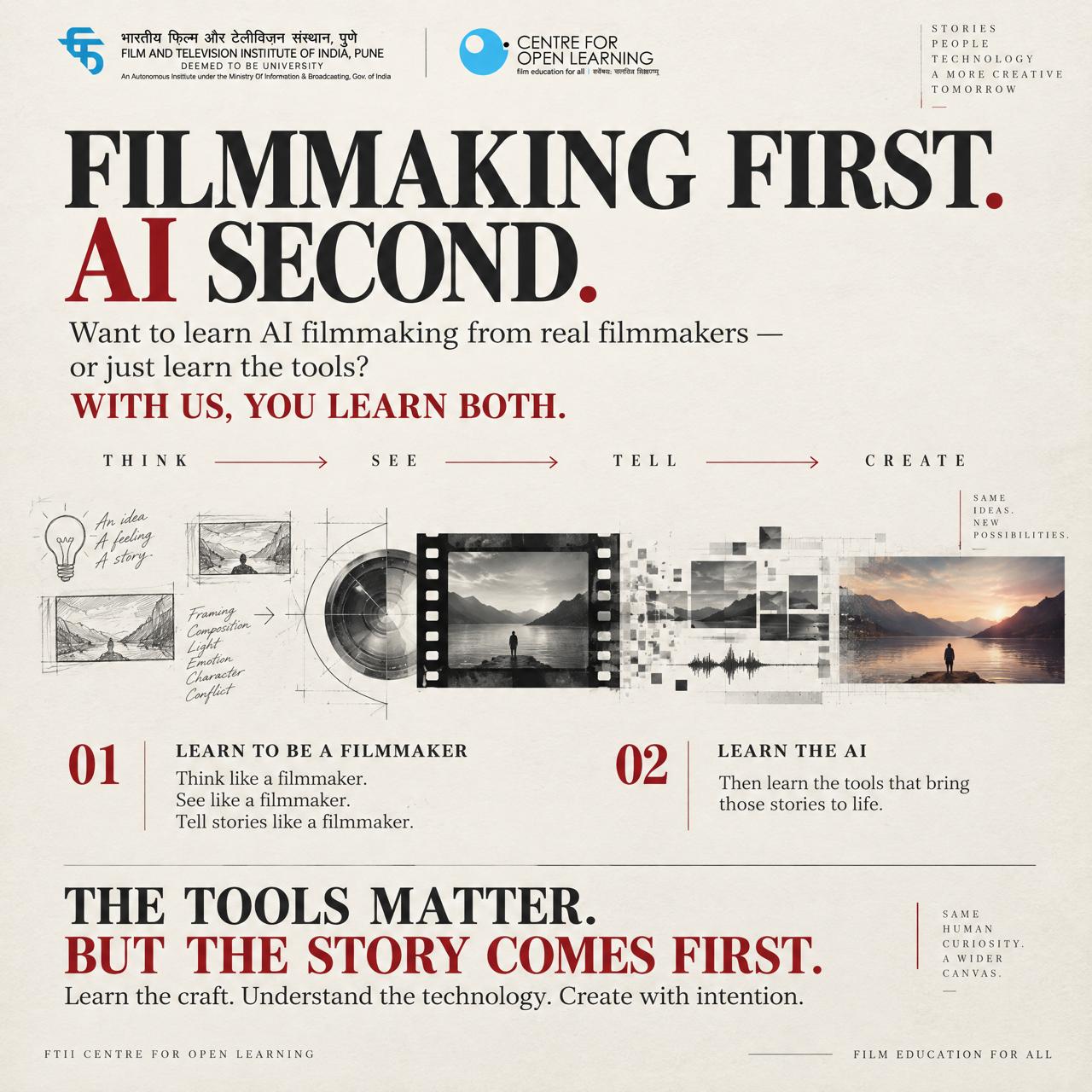
Start with the language of cinema
Before generating a frame, a filmmaker makes choices about character, conflict, perspective and emotion. A lens changes how a space feels. Lighting shapes attention. Blocking determines relationships within a scene. Editing and sound influence the rhythm through which an audience experiences it.
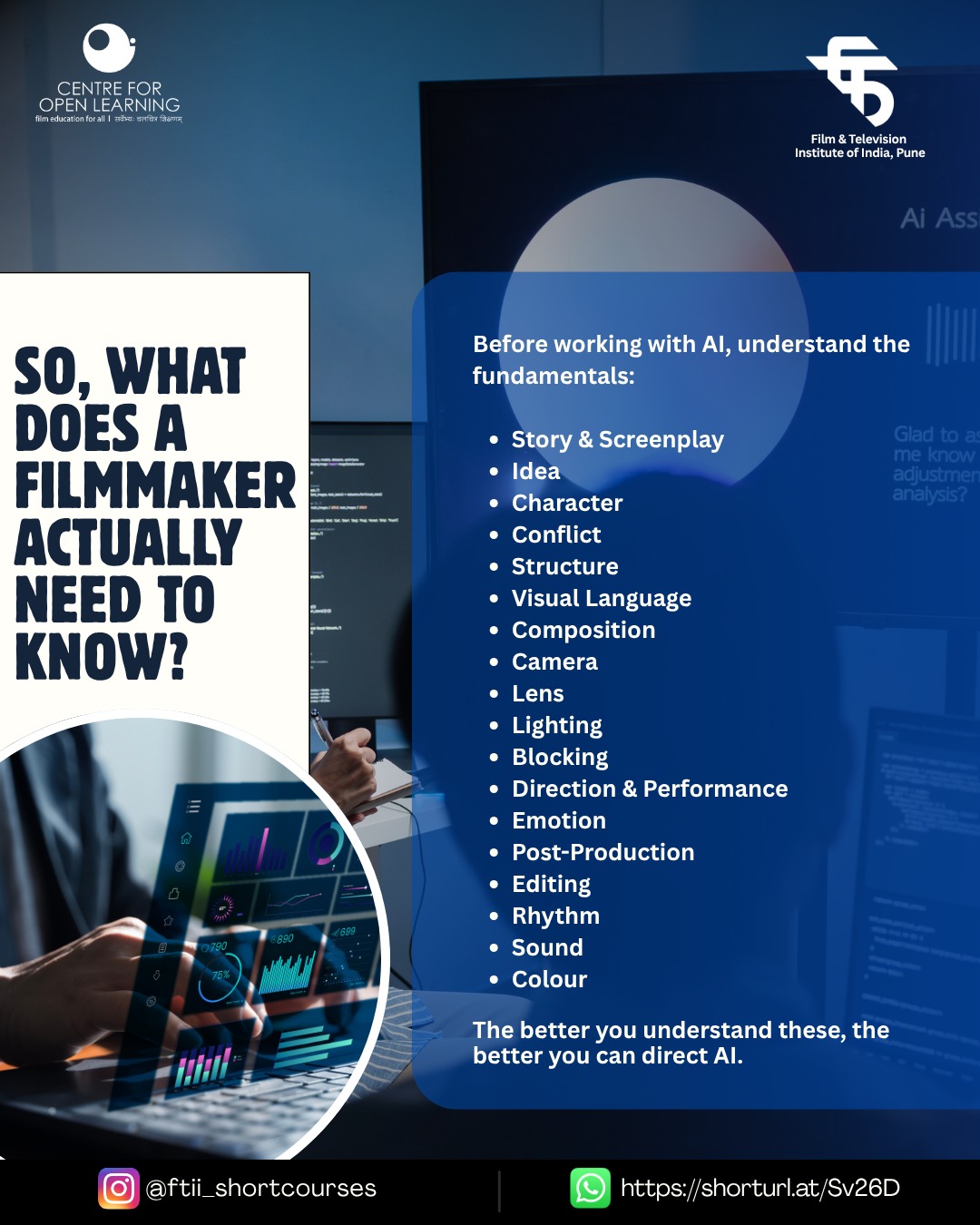
The filmmaking foundations span these areas of study:
- Story and screenplay
- Idea
- Character
- Conflict
- Structure
- Visual language
- Composition
- Camera
- Lens
- Lighting
- Blocking
- Direction and performance
- Emotion
- Post-production
- Editing
- Rhythm
- Sound
- Colour
Together, these subjects provide a vocabulary for explaining what a scene needs to communicate. That vocabulary remains useful when the production process includes generated images or video.
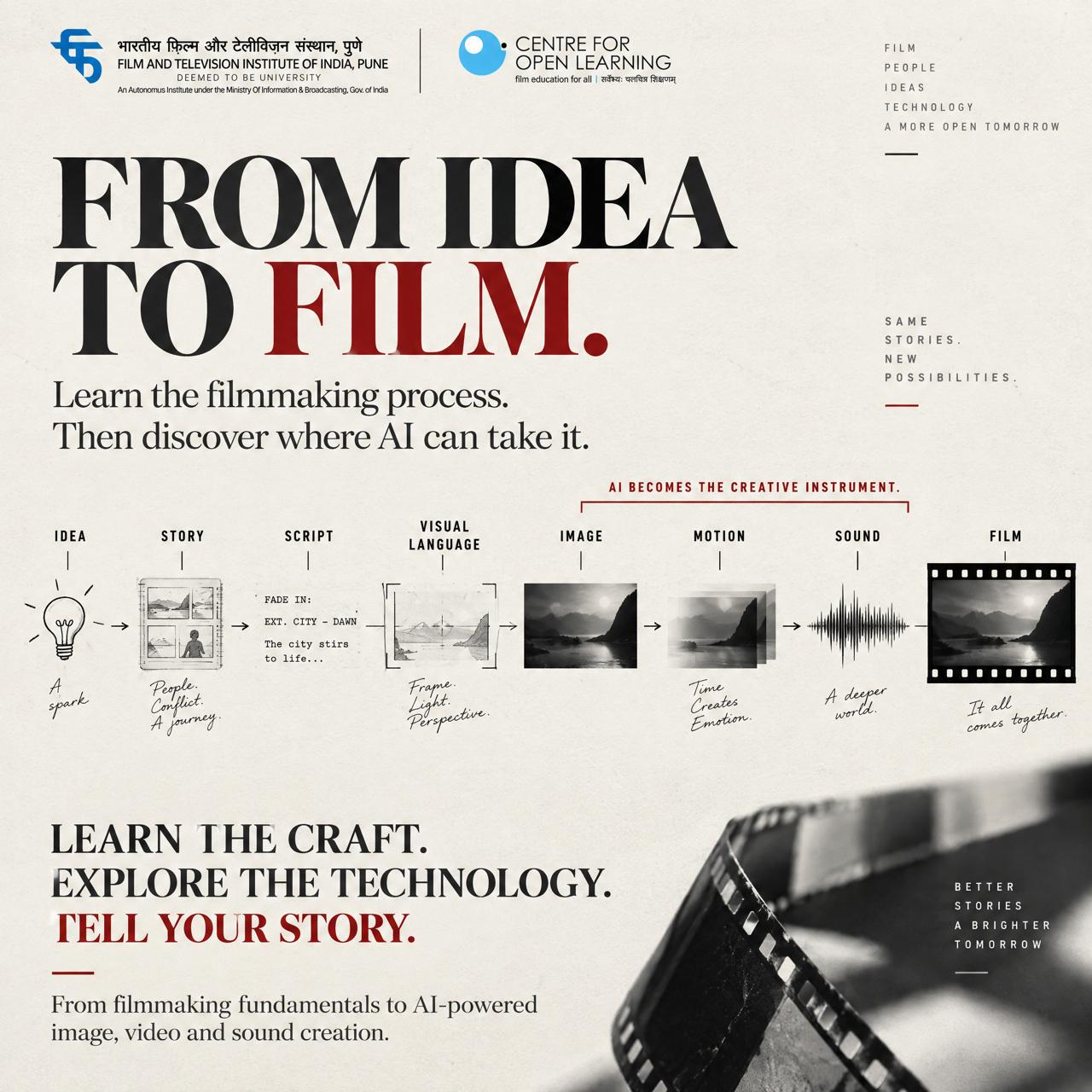
Translate film craft into an AI workflow
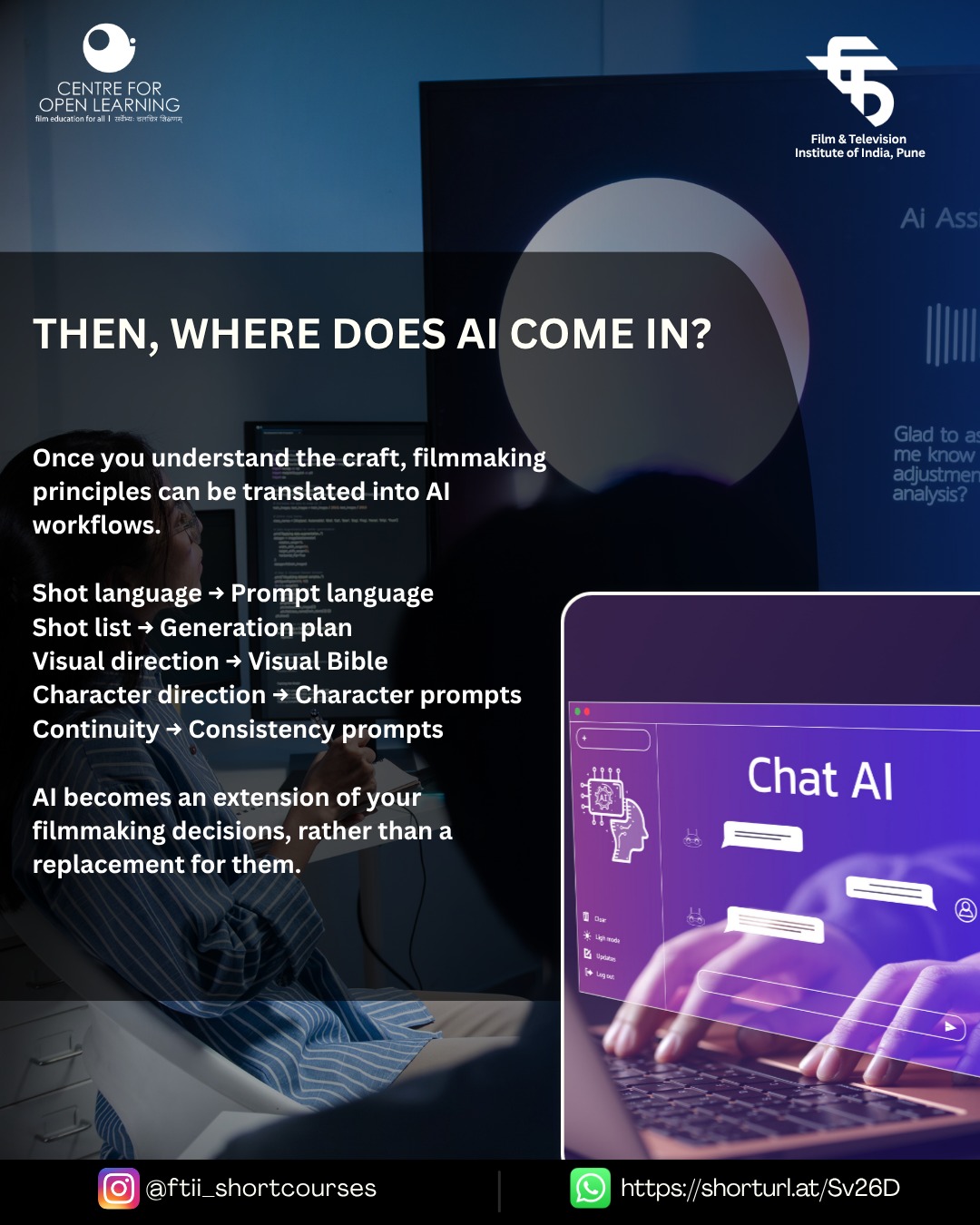
Filmmaking decisions provide a starting point for an AI workflow. Creative intention becomes a set of instructions, references and a production plan; the resulting images and sequences are then assessed against the needs of the story.
| Filmmaking foundation | AI workflow counterpart |
|---|---|
| Shot language | Prompt language |
| Shot list | Generation plan |
| Visual direction | Visual bible |
| Character direction | Character prompts |
| Continuity | Consistency prompts |
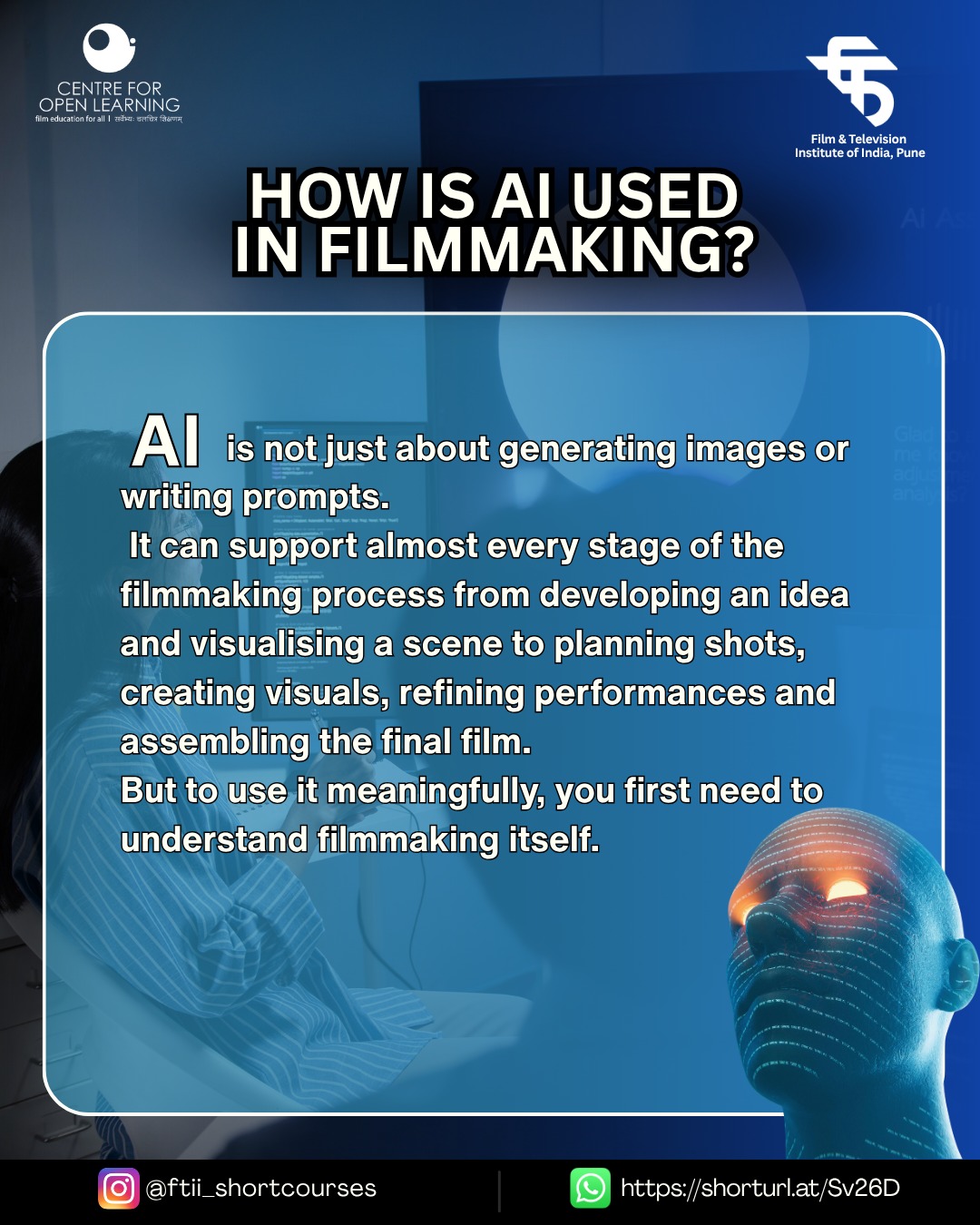
The course approach considers AI across idea development, scene visualisation, shot planning, visual creation, performance refinement and final assembly. The emphasis remains on directing the process through a clear creative intention.
View the supporting AI workflow graphics
The ten-day AI cinema masterclass
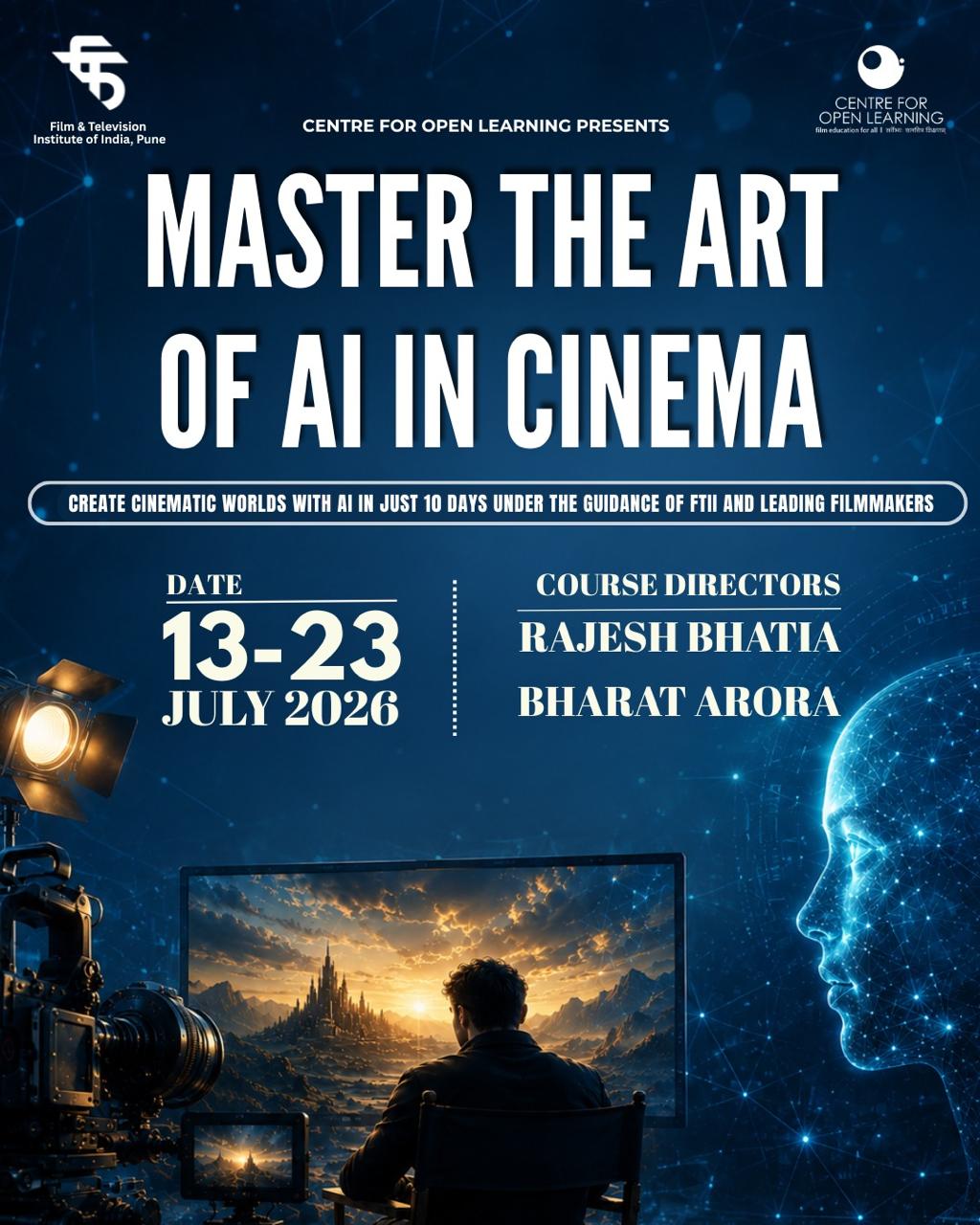
Master the Art of AI in Cinema was advertised by the Centre for Open Learning as a ten-day masterclass with course directors Rajesh Bhatia and Bharat Arora.
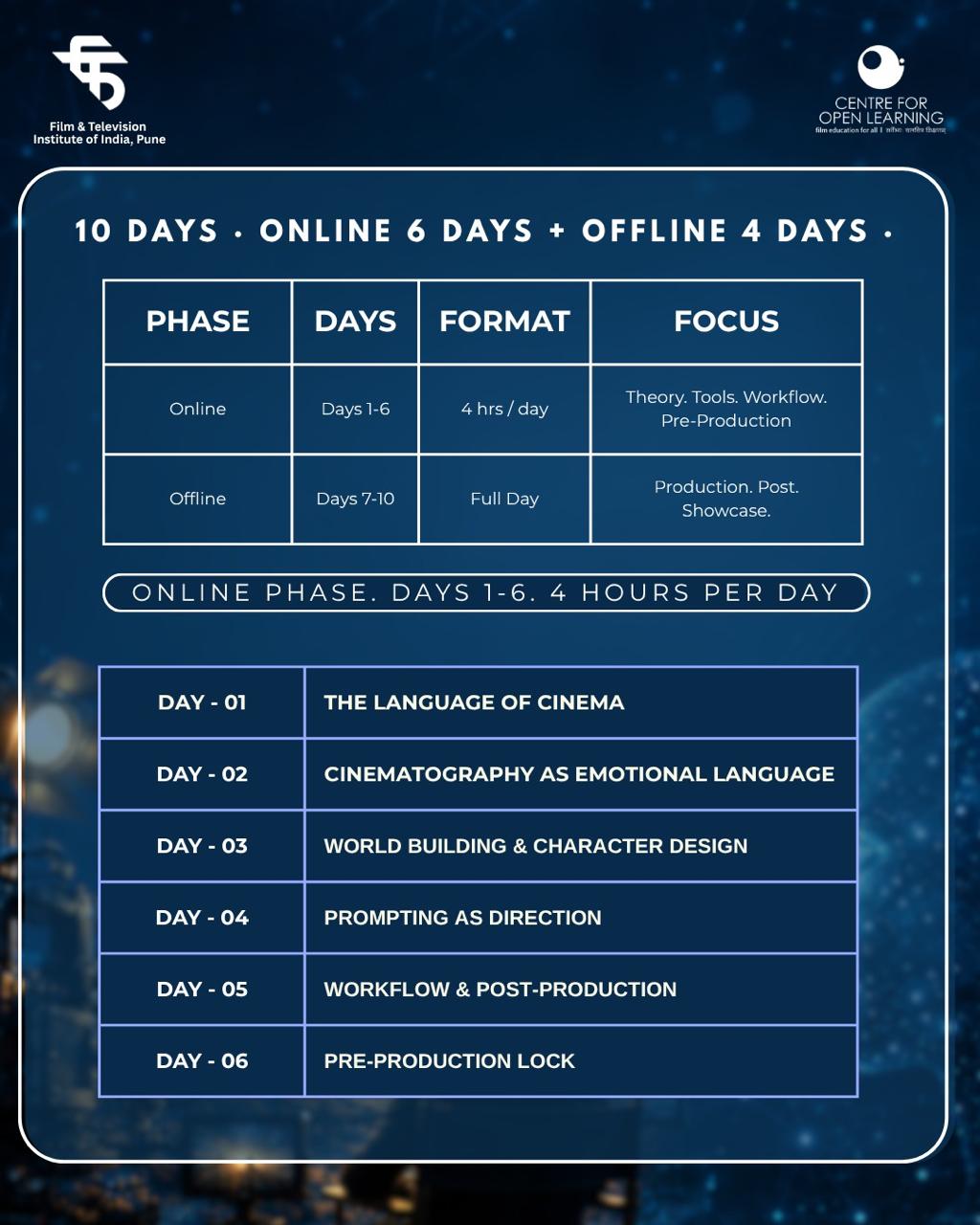
The July announcement lists –. Its curriculum sets out six online teaching days followed by four offline days in Mumbai.
Online and offline curriculum
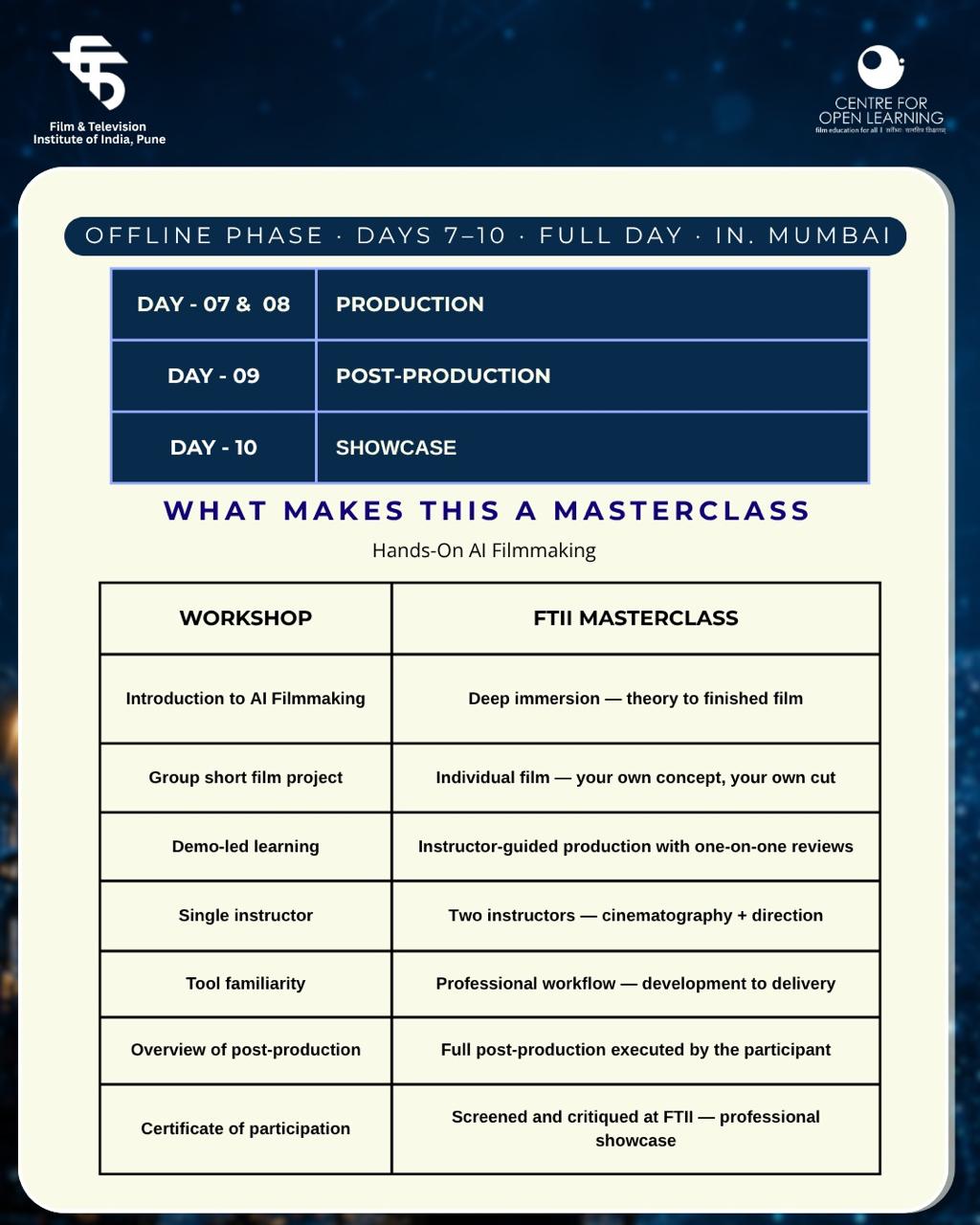
The online phase is described as four hours per teaching day, covering theory, tools, workflow and pre-production. The offline phase is described as full-day work covering production, post-production and a showcase.
| Day | Format | Listed focus |
|---|---|---|
| 1 | Online · 4 hours | The language of cinema |
| 2 | Online · 4 hours | Cinematography as emotional language |
| 3 | Online · 4 hours | World building and character design |
| 4 | Online · 4 hours | Prompting as direction |
| 5 | Online · 4 hours | Workflow and post-production |
| 6 | Online · 4 hours | Pre-production lock |
| 7–8 | Offline · full day · Mumbai | Production |
| 9 | Offline · full day · Mumbai | Post-production |
| 10 | Offline · full day · Mumbai | Showcase |
View the original curriculum graphics
Learning aims and intended outputs
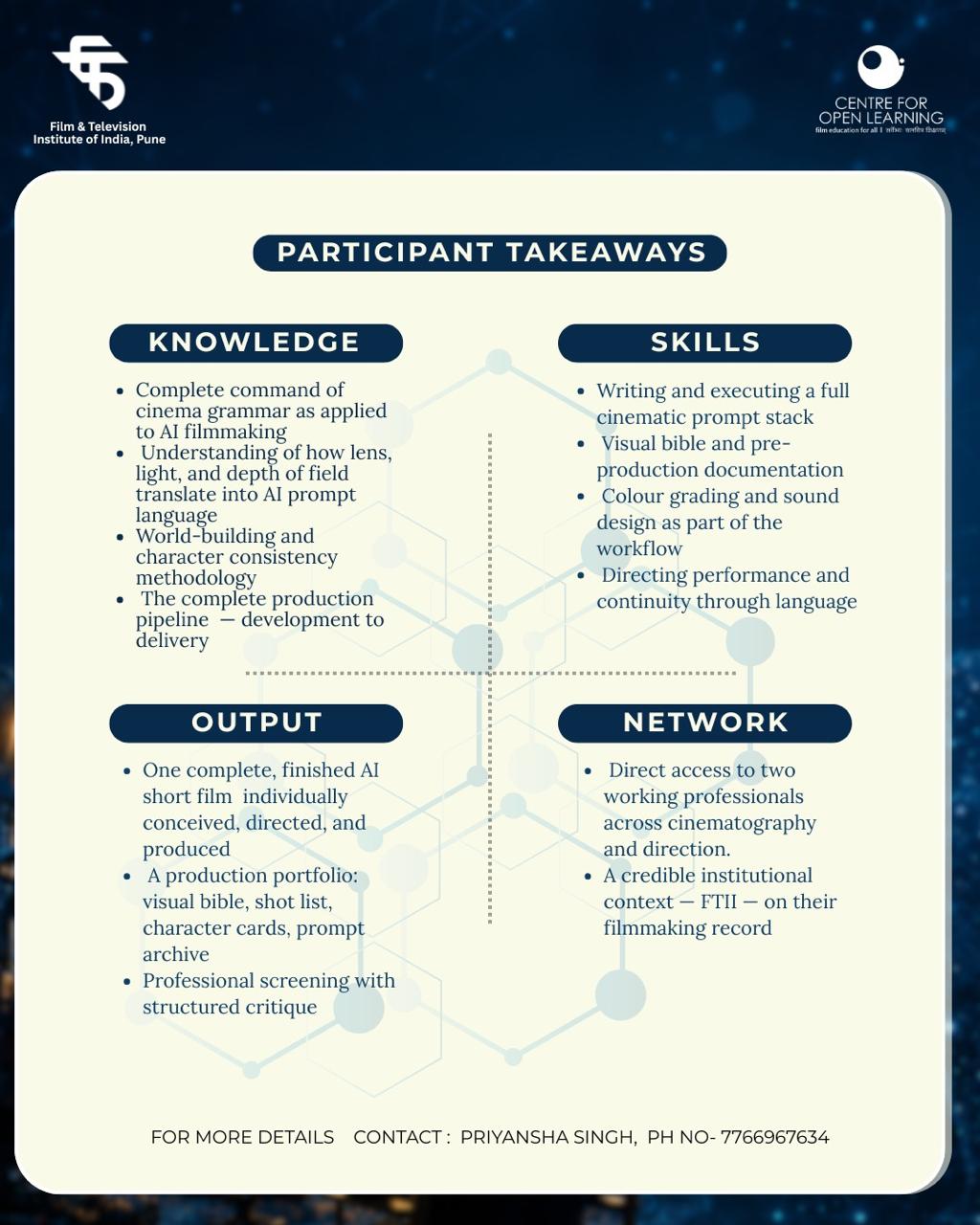
The programme outline sets out the following learning aims and intended outputs:
- Apply cinema grammar, lens choices, lighting and depth of field to AI prompt language.
- Develop world-building and character-consistency methods.
- Write and execute a cinematic prompt stack, supported by a visual bible and pre-production documentation.
- Explore performance direction, continuity, colour grading and sound design within a production workflow.
- Work towards an individually conceived, directed and produced AI short film.
- Assemble a production portfolio including a visual bible, shot list, character cards and prompt archive.
- Professional interaction and structured critique as part of the learning process.
The course directors
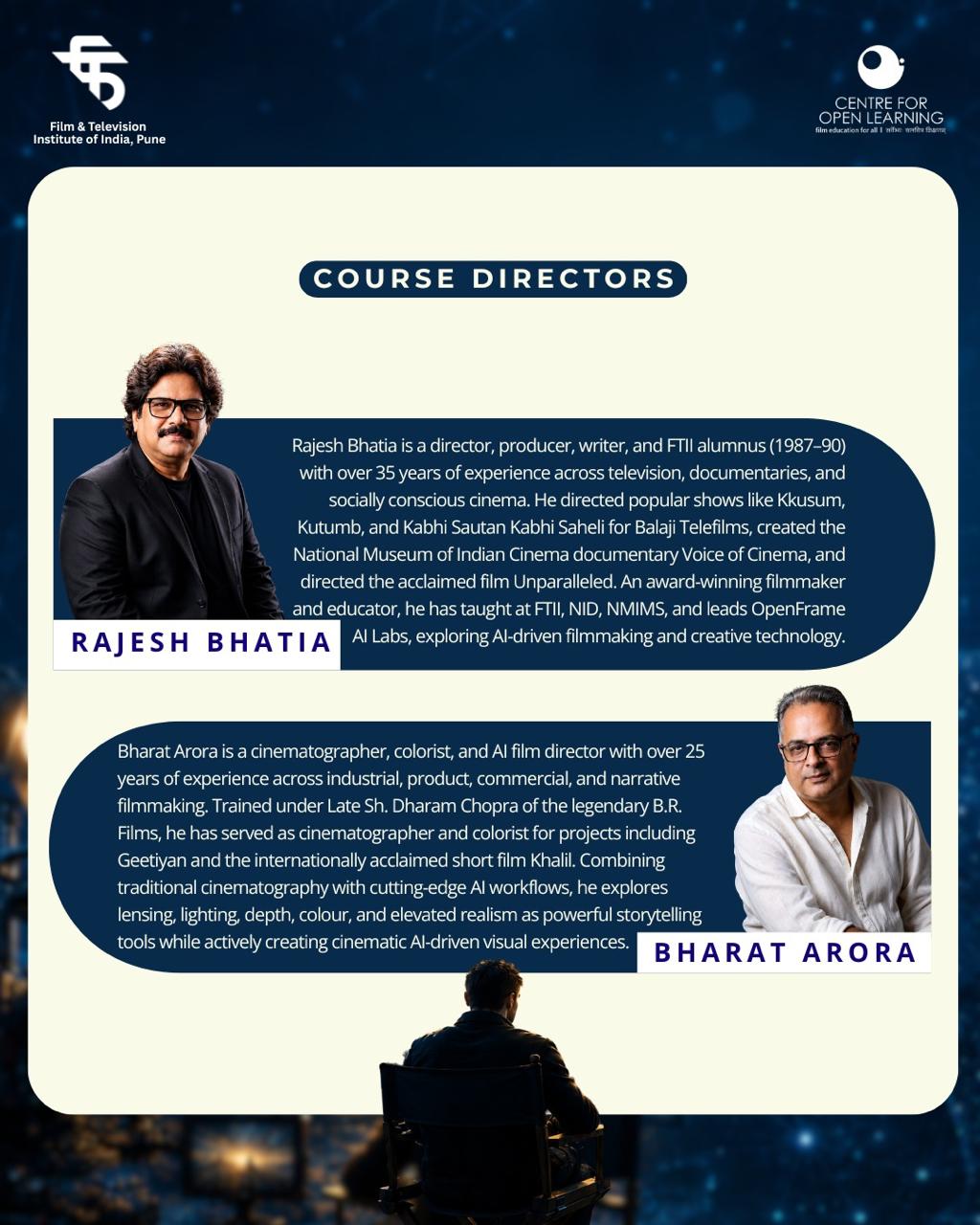
The course brings together experience in direction and cinematography. The profiles below reflect the experience and credits listed in the course announcement.
Rajesh Bhatia
Rajesh Bhatia is a director, producer, writer and FTII alumnus from the 1987–90 cohort. His course profile describes over 35 years of experience across television, documentaries and socially conscious cinema.
His listed directing credits include Kkusum, Kutumb and Kabhi Sautan Kabhi Saheli, the National Museum of Indian Cinema documentary Voice of Cinema, and Unparalleled. His profile also records teaching at FTII, NID and NMIMS, and work leading OpenFrame AI Labs.
Bharat Arora
Bharat Arora is a cinematographer, colorist and AI film director. His course profile describes over 25 years of experience across industrial, product, commercial and narrative filmmaking.
His profile records training under the late Shri Dharam Chopra at B.R. Films and lists Geetiyan and Khalil among his projects. His work connects traditional cinematography with AI workflows through lensing, lighting, depth, colour and visual storytelling.
The fifteen-day filmmaking and AI cinema programme
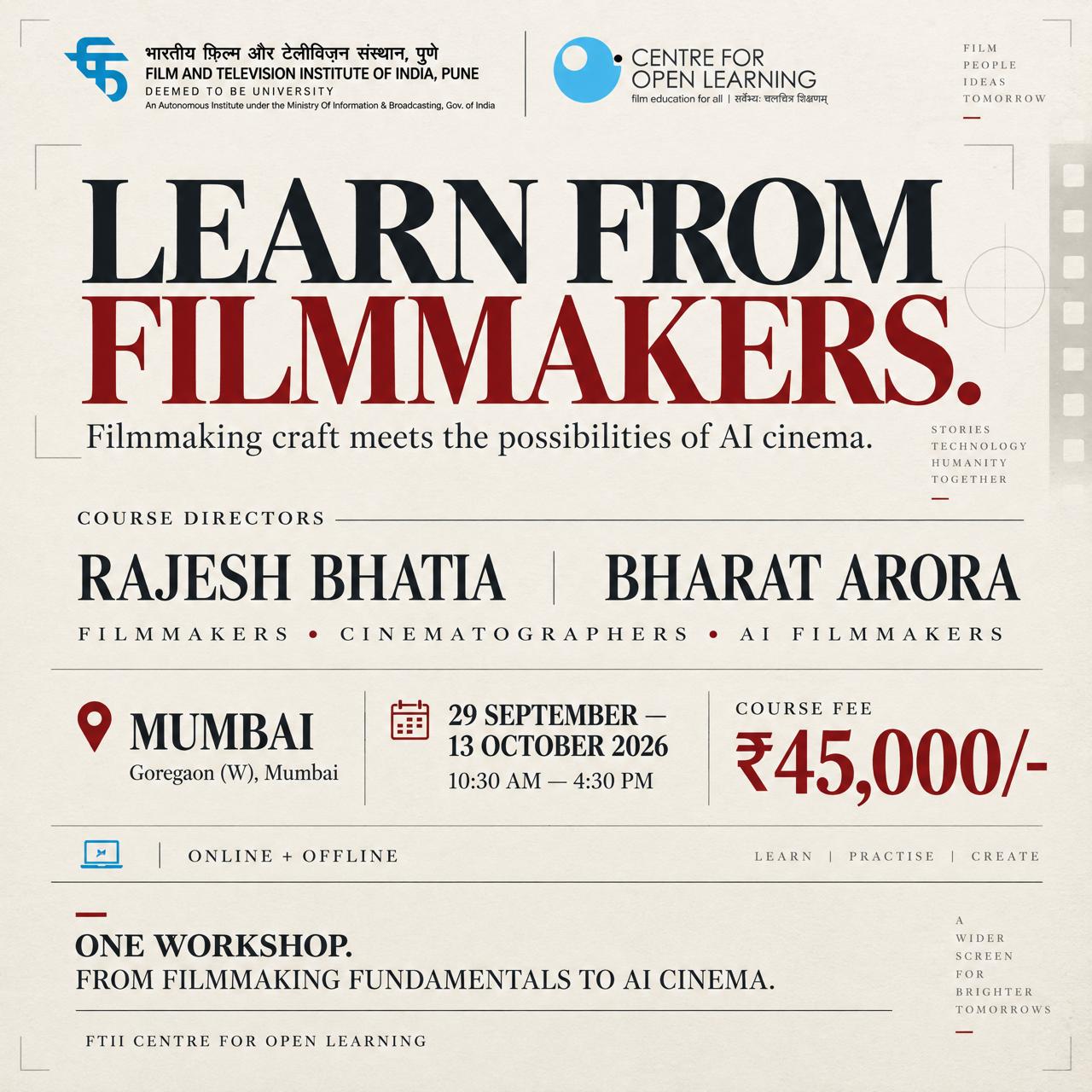
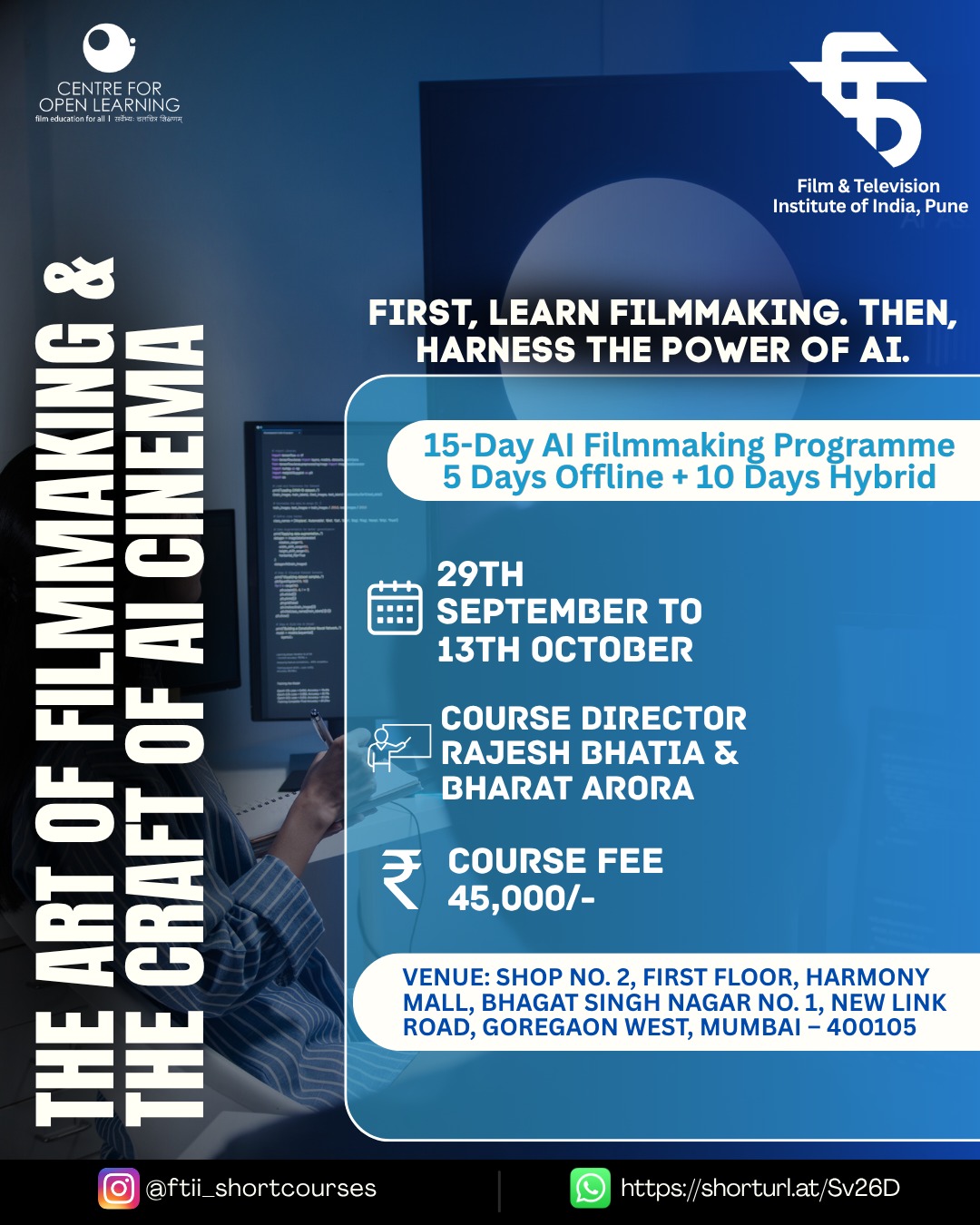
The September–October announcement presents The Art of Filmmaking & the Craft of AI Cinema, a separate fifteen-day programme connecting filmmaking foundations with AI-assisted production.
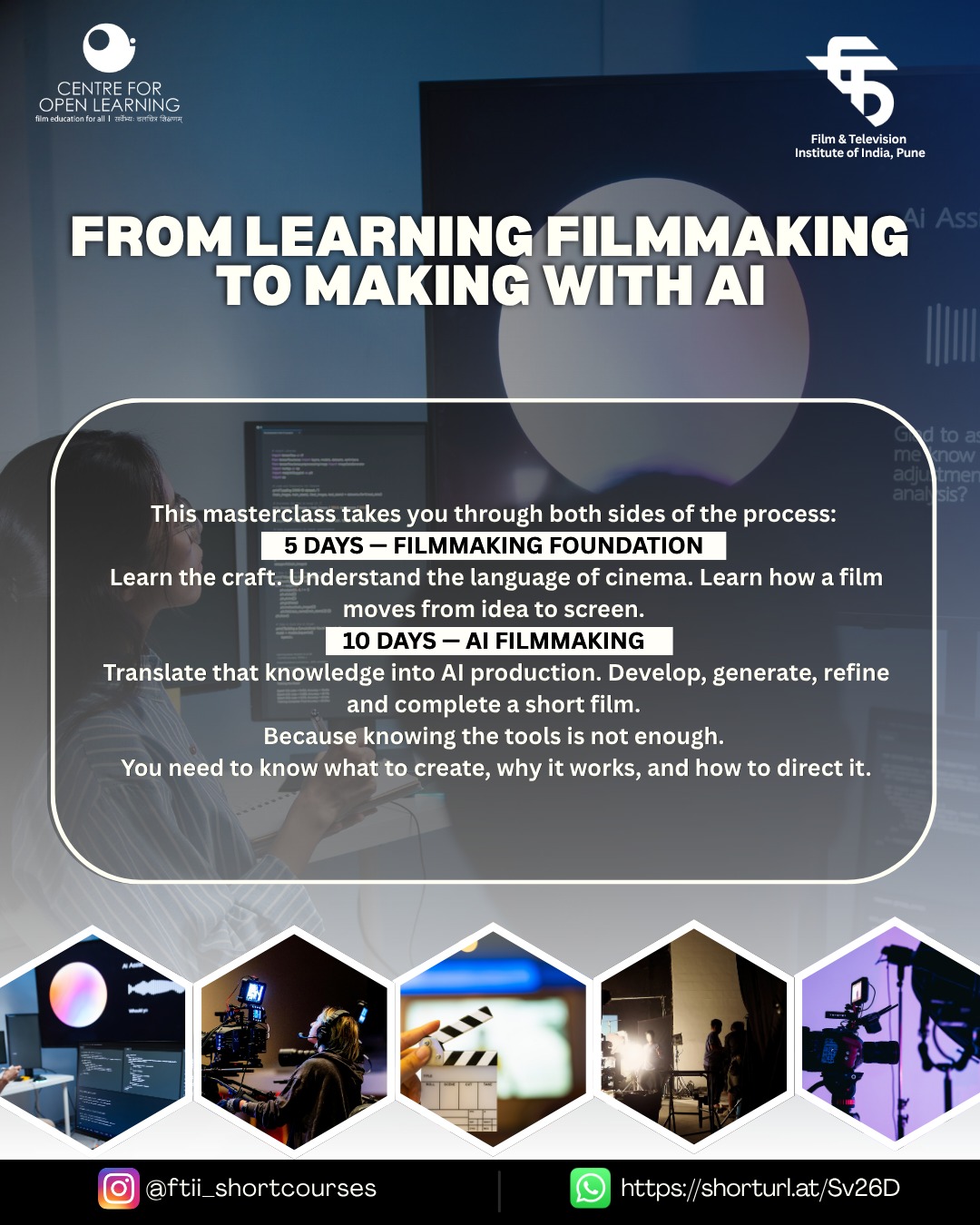
The programme graphics describe five offline days plus ten hybrid days. They also outline a learning progression of five days of filmmaking foundations followed by ten days of AI filmmaking, working towards a short film.
| Advertised dates | – |
|---|---|
| Advertised daily time | 10:30 AM–4:30 PM, as listed in the announcement |
| Advertised fee | ₹45,000, as advertised for that edition |
| Listed venue | Shop No. 2, First Floor, Harmony Mall, Bhagat Singh Nagar No. 1, New Link Road, Goregaon West, Mumbai – 400105 |
| Course directors | Rajesh Bhatia and Bharat Arora |
View the supporting format and venue poster
Tool demonstrations and promotional offers
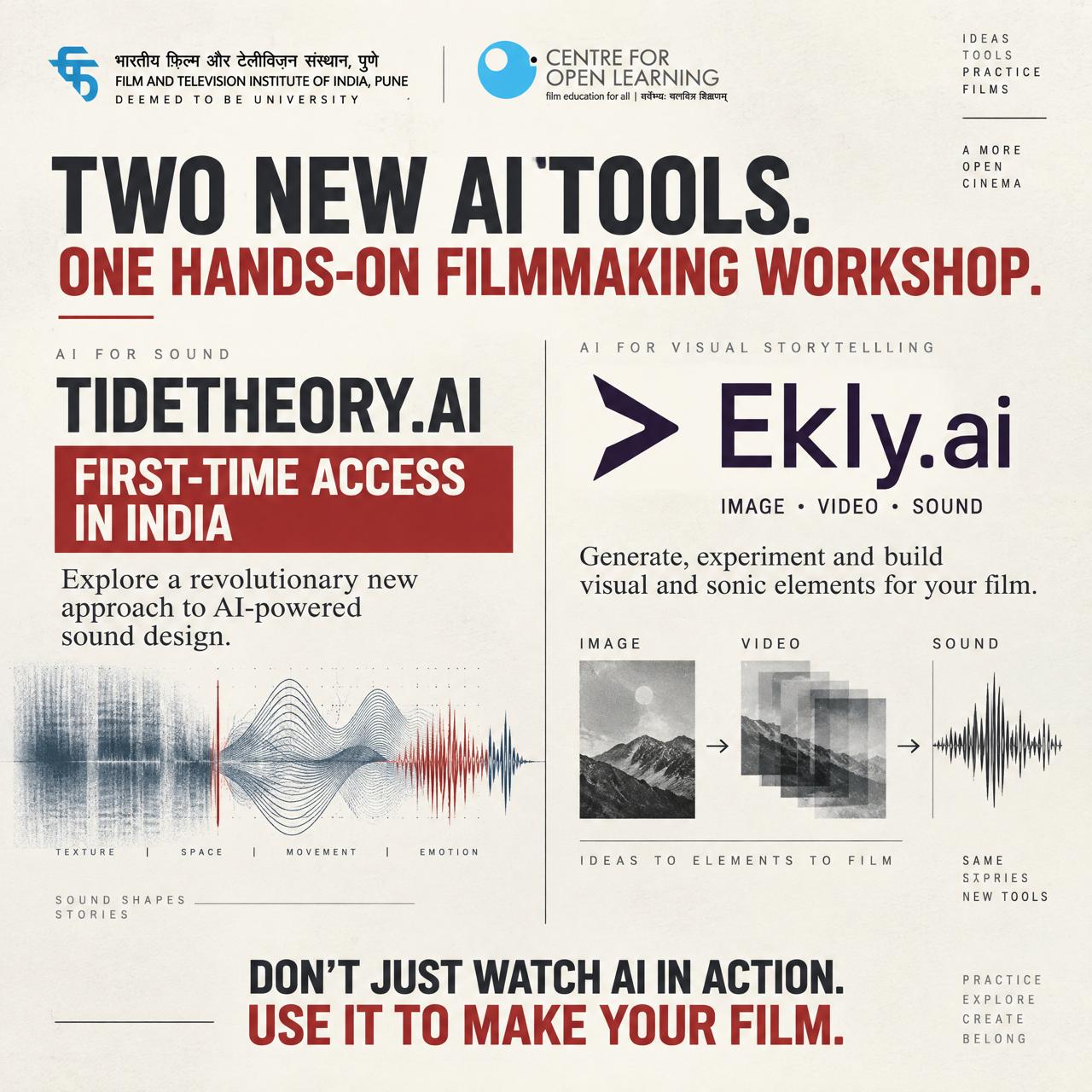
The programme promotion pairs TideTheory.ai with AI-powered sound design and Ekly.ai with image, video and sound experimentation. The focus is on exploring how visual and sonic elements can contribute to a film.
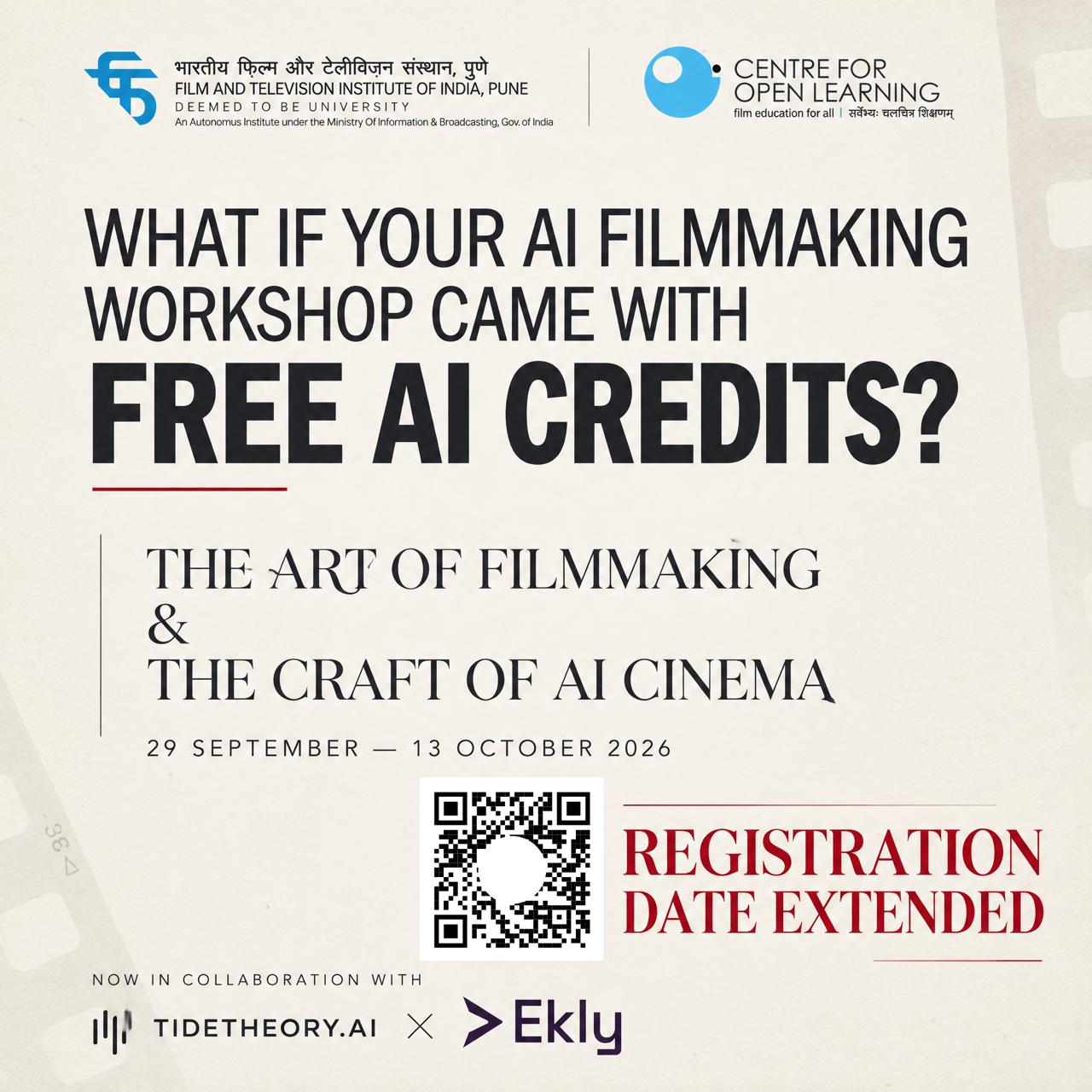
The archived graphics include a free-credit offer and a registration-extension notice from that campaign. They are retained as part of the course history, rather than as a current offer.
View the historical tool and offer graphics
An OFAL milestone
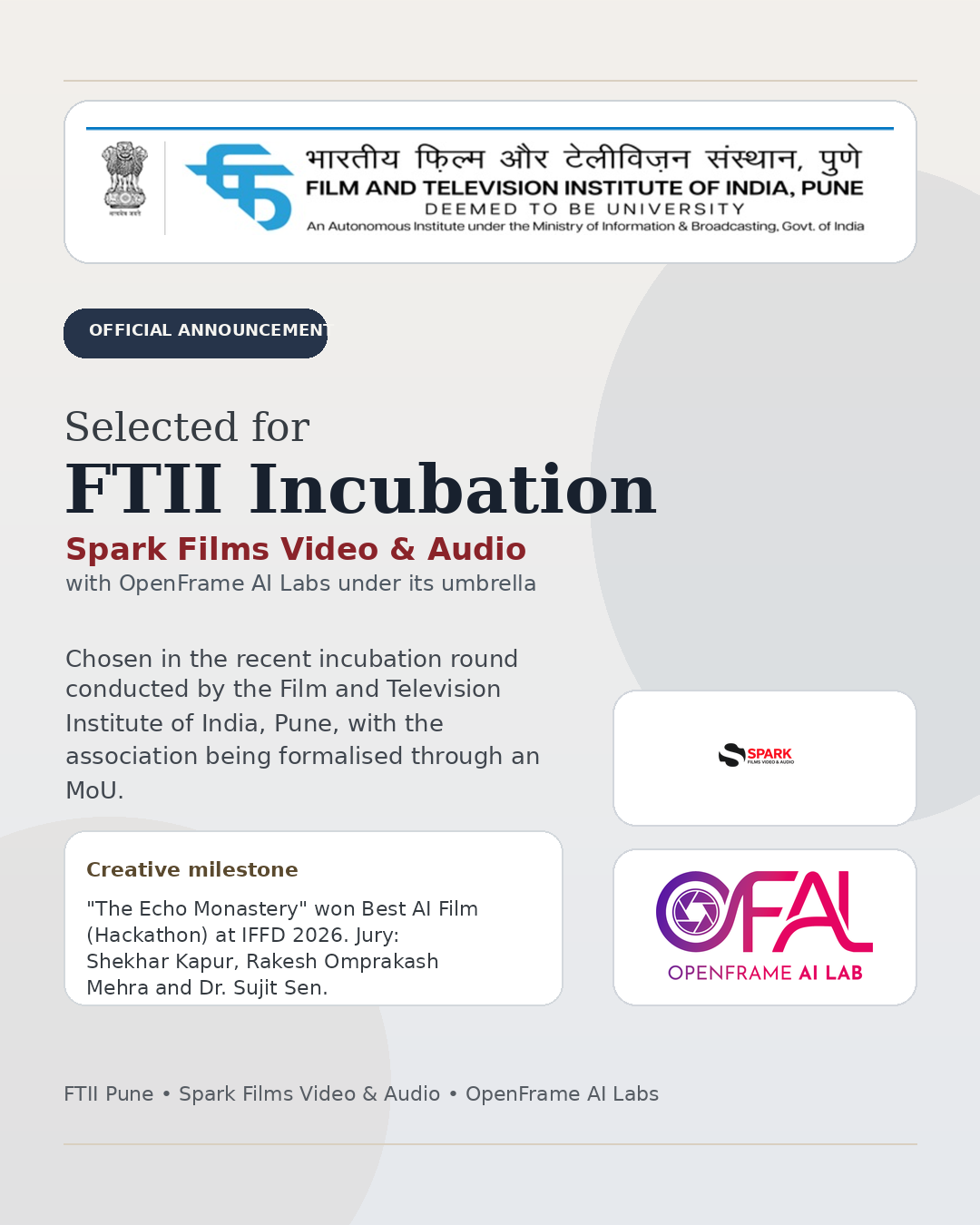
OFAL’s incubation announcement records the selection of Spark Films Video & Audio, with OpenFrame AI Labs under its umbrella, in an FTII incubation round. The announcement describes the association as being formalised through an MoU.
The same announcement reports a creative milestone for The Echo Monastery: Best AI Film (Hackathon) at IFFD 2026. It names Shekhar Kapur, Rakesh Omprakash Mehra and Dr. Sujit Sen as jury members.
Film craft in motion
A moving image brings together choices that a still frame can only suggest: duration, movement, performance and the relationship between shots. These three videos offer different ways to explore the connection between filmmaking craft and AI-assisted creation.
Cinematic images: atmosphere, framing and movement
A montage moves between rain-soaked streets, interior scenes, portraits and an open-road sequence. Watch how changes in setting, composition and movement create different moods. These are useful viewing questions for any filmmaker: where does the eye travel, what does the frame emphasise, and how does one image prepare us for the next?
Glimpses of student films
The opening title identifies these excerpts as films created by participants after five-day and seven-day AI filmmaking workshops conducted by Rajesh Bhatia and Bharat Arora for FTII. The selection provides a way to consider how individual shots become narrative sequences through character, setting and editing. These excerpts are presented as identified in the video; they are not attributed to either course edition advertised above.
From camera to prompt: a drawn reflection on craft
A pencil-drawing animation moves from a hand holding a camera to a phone displaying a cinematic prompt, then develops a scene involving a figure, a camera and rain. The visual progression connects traditional image-making with AI-assisted tools. It returns to the article’s central idea: the technology may change, while creative intention continues to shape the image.
When viewing the clips, look beyond an individual striking frame. Consider whether composition, movement and editing work together to communicate an idea or emotion—the same questions that guide the filmmaking foundations discussed above.
Bring intention to every frame
Across these materials, the consistent teaching idea is a progression from understanding cinema to making deliberate choices with AI. Story, composition, performance, continuity, editing and sound provide the framework; generative tools become part of the process through which those choices are explored.
The ten-day curriculum and the separate fifteen-day programme announcement illustrate two approaches to learning film craft alongside AI-assisted production. Both connect creative intention with the practical work of shaping images, sequences and sound.